

A blended family succeeds when adults prepare together, seek support before conflict escalates, and uses language that builds identity rather than division. Replacing step with bonus i.e. bonus parent, bonus sister, bonus son; this immediately shifts the blended family narrative from deficit to addition. Simple language changes plant powerful seeds in how a blended family sees themselves and each other.
Where did “Step-Parent” come from?
Let’s talk about “step” people.
Who exactly came up with that label? I mean, are we talking a step-up? A step-down? A step on the family tree? What, exactly, are we stepping on here?
Being of the curious variety, I did some digging. There are actually a couple of origins. The prefix “step” comes from the old English “step-” meaning related by marriage rather than blood. The Icelandic version suggests bereavement, a stepchild was one whose parent had died. Either way, it’s not exactly a warm and fuzzy beginning for a word that describes millions of loving family relationships.
And the cultural baggage that followed? Devastating. Think Disney, the cruel stepmother with bony fingers and an evil cackle who makes the poor child’s life miserable. Step-families have long been regarded as “less than,” despite the fact that more than half of all marriages ending in divorce means that a blended family is not just common; they’re the new normal. Understanding real blended family success strategies starts with retiring that old narrative.
And don’t even get me started on “half-brother” and “half-sister.” Is this child a fraction of something? Half of what, exactly? Can we muddy the family waters just a little more, please?
The movie, Yours, Mine and Ours comes to mind.
How did step-parents get such a bad reputation?
Some of it comes from personal experience. Some of it now comes from research. And the research doesn’t entirely let step-parents off the hook. Studies show that stepfathers tend to use harsher discipline with stepchildren than with their biological children, and stepmothers experience more conflict with stepdaughters than with their own daughters.
So yes. There’s that.
But here’s what I find in my practice: most people focus almost entirely on the child’s experience and seriously underestimate what the step-parent is going through. Are we assuming that because adults made a conscious choice to enter this family, they should just suck it up, buttercup?
Adults have feelings too. And they get hurt. Deeply.
Yes, they chose this. But they often don’t see the pain coming. Too much change too fast throws anyone’s gyroscope off.
The “invited parent” may be seen as an interloper: living proof that mom and dad are never getting back together. Or they may be cast as a savior. Either way, they are entering an established social system with its own culture, its own rules, its own history; and they may hold “guest” status for a very long time.
It’s not easy. Especially when the previous partnership ended on a contentious note. Especially when finances are complicated. Especially when the children have behavioral, learning, or developmental challenges, including children with ADHD, dyslexia, or autism in blended families, who often need an even more deliberate transition plan.
Should a Blended Family Seek Therapy?
Blended family parents benefit enormously from a neutral third party, a therapist or child development specialist, who can give them solid information and real strategies for building something new together. Don’t overlook the needs of the adults. When differing parenting styles create conflict, and they will, it’s almost never really about the rule in question, it’s about two people who grew up with two different rulebooks. Work it out before the wedding, not after.
How does a Blended Family Affect the Kids?
Yes, they are usually the most vulnerable members of this new tribe. And they can respond in a wide range of ways. One of the healthiest responses? Pride. Some children express genuine pride that their family chose to come together, rather than simply being born into it by luck. That’s a beautiful reframe, and it’s possible. But it takes well-adjusted adults with realistic expectations, mutual support, and professional guidance when needed.
Children with special needs: ADHD, dyslexia, language processing disorders, autism, and other behavioral challenges; require an even more thoughtful approach. Learn what you need to know about how those needs show up in your bonus kids. Be proactive. Make no assumptions. Clarify your role clearly and early.

Replace Step-Parents with Bonus Parents!
Now we’re getting to it. I’m not suggesting you start drinking to cope with the challenges of step-parenting. But there is something you can do right away.
Change the label.
Words matter. The words that become labels are among the most powerful words we have. So what happens when you replace “step” with “bonus?”
Immediately, you shift the narrative. A bonus parent. A bonus son. A bonus daughter. Bonus communicates something positive, something added, not something lesser. Can you think of a single time you’ve used the word “bonus” negatively?
I didn’t think so.
Yes, it’s a simple change. But simple changes plant seeds. Don’t you think it might feel just a little different for everyone when your stepdaughter introduces your daughter as her bonus sister?
It just might. And those small shifts in language can reap a surprisingly powerful harvest over time.
How can a Blended Family Succeed? Build a tribe!
The blended families I have seen succeed are the ones that prepare together and plan together. When everyone knows what’s expected, it’s easier to follow the playbook when something goes wrong, and something always does.
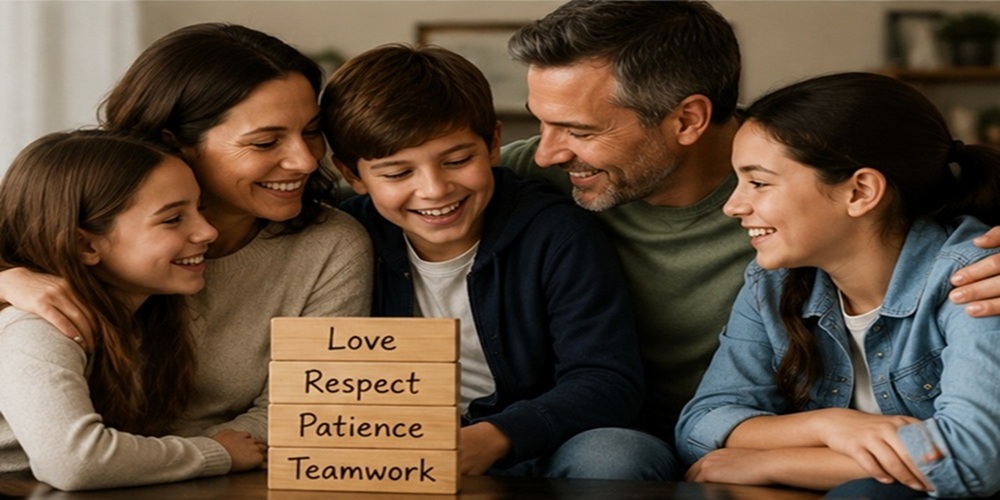
Hold family meetings. Write a family mission statement. Hang it on the wall. It doesn’t have to be professionally designed, write it on the back of a grocery bag in magic marker if that’s what you’ve got. What matters is that it’s there, visible, a declaration that this group of people belongs to the same tribe.
We’re in it to win it.
Use language that builds up rather than tears down. Educate yourself on adolescence specifically, so you don’t take those years personally. Because trust me, you’ll want to take them personally.
Be realistic. Be prepared. And after that, just do the best you can.
Oh, and that “rule of thumb” thing I mentioned? In earlier times, a man was legally permitted to beat his wife with a rod no thicker than his thumb.
Yeah. Thanks for that.

Building a stronger you, one day at a time, Dr. Claudia
Browse more family, relationship, and parenting articles:
PUC
#blended families #blended family success #bonus parents #co-parenting strategies #custody conflict #family communication strategies #family estrangement recovery #parenting adult children #special needs blended family #step familes #step family #step-parents